
Your content might be written for humans, but if you aren’t speaking the language of search engines, you’re essentially invisible to the algorithms that matter. It’s frustrating to pour your heart into a blog post only to see it buried on page three of the Aussie search results. You’ve likely heard the term thrown around in meetings, but asking What is Schema often leads to a rabbit hole of technical jargon like JSON-LD and structured data that feels more like a headache than a help. You’re right to expect more from your digital presence when aiming to stand out in a crowded marketplace.
This guide cuts through the noise to show you how Schema markup transforms your search visibility and acts as a non-negotiable component of high-performing monthly SEO packages. You’ll discover how this digital translator helps you secure rich snippets and significantly improve your click-through rates. We’ll explore the practical benefits of structured data, giving you the confidence to ensure your agency is delivering the technical support your business deserves. We’re going to demystify the code and focus on the strategic growth that happens when search engines finally understand your true value.
Key Takeaways
- Understand What is Schema and how it functions as a digital translator to help search engines accurately categorise and display your website content.
- Uncover the strategic benefits of rich snippets, including how they enhance your search presence and encourage more users to click through to your pages.
- Recognise why structured data is a vital part of monthly SEO management, ensuring your technical foundation adapts as search algorithms evolve.
- Gain clarity on why professional JSON-LD implementation is superior to generic plugins for maintaining high performance and avoiding technical bloat.
- Learn how to evaluate service agreements to ensure they include the technical SEO support necessary for long-term growth and visibility.
What is Schema Markup in SEO? A Simple Definition
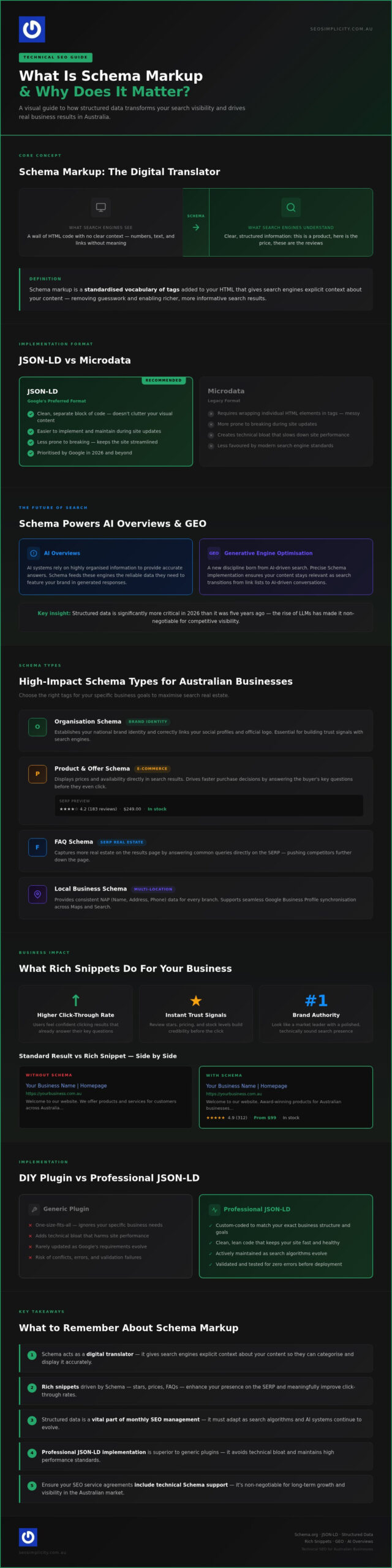
Think of Schema markup as the digital translator that bridges the gap between your website’s content and the algorithms used by search engines like Google and Bing. While your human visitors see engaging copy and beautiful images, search engines primarily see a collection of code. What is Schema at its core? It’s a semantic vocabulary of standardised tags, also known as structured data, that you add to your HTML to help search engines understand exactly what your page is about.
Without this markup, a search engine might see a string of numbers and struggle to determine if they represent a phone number, a product price, or a calendar date. By implementing these tags, you provide explicit context that removes the guesswork. This collaborative standard was established by Schema.org, a community founded by major search providers to ensure every website can communicate its purpose with precision. You should distinguish this from “mental schemas” found in psychology; in the digital marketing space, we’re talking strictly about the technical framework that categorises your data for better visibility.
The Language of the Web: JSON-LD vs Microdata
Choosing the right format for your structured data is essential for maintaining a fast, healthy website. In 2026, Google prioritises JSON-LD (JavaScript Object Notation for Linked Data) because it’s a clean, separate block of code that doesn’t clutter your visual content. Unlike Microdata, which requires you to wrap individual HTML elements in tags, JSON-LD is easier to implement and less prone to breaking during site updates. Professional SEO services typically handle this complex JSON-LD coding for you, ensuring your site remains streamlined while still providing the deep context search engines crave.
How Structured Data Powers AI Overviews
The rise of Generative Search and Large Language Models (LLMs) has made structured data more critical than it was five years ago. AI overviews rely on highly organised information to provide accurate answers to user queries. By using Schema, you feed these AI engines the reliable data they need to feature your brand in their generated responses. This shift has birthed a new discipline known as Generative Engine Optimisation (GEO). Implementing precise Schema ensures your content remains relevant as search transitions from a simple list of links into a sophisticated AI-driven conversation.
The Business Benefits: Why Your Website Needs Schema
Harnessing the power of structured data does more than just tidy up your code; it fundamentally changes how your business appears to potential customers. While some debate the direct impact on rankings, the indirect benefits to your bottom line are undeniable. By providing clear context, you unlock rich snippets that make your search results more interactive and informative. Understanding What is Schema allows you to move beyond basic SEO and start competing for premium search real estate in a crowded digital marketplace.
Visual cues like review stars, pricing, and stock levels act as immediate trust signals to the user. These enhancements lead to a significantly improved click-through rate (CTR) because users feel more confident clicking a result that already answers their primary questions. This organised presentation also builds brand authority, making your business look like a market leader that has its technical house in order from the first interaction.
Popular Schema Types for Australian Businesses
Strategic implementation starts with choosing the right tags for your specific goals. We focus on these high-impact types to ensure maximum visibility:
- Organisation Schema: Establishes your national brand identity and correctly links your social profiles and official logo.
- Product & Offer Schema: Displays prices and availability directly in search results to drive faster purchase decisions.
- FAQ Schema: Captures more real estate on the results page by answering common queries directly on the SERP.
Local Business Schema for National Brands
National brands often struggle to manage multiple locations without creating redundant city-specific content. Local Business Schema solves this by providing search engines with consistent Name, Address, and Phone number (NAP) data for every branch. This structured approach supports seamless Google Business Profile synchronisation, ensuring your branch details are accurate across Maps and Search. To see how these technical elements fit into a broader strategy, you can explore our on-page optimisation services that integrate Schema as a standard feature. By maintaining this level of technical precision, you ensure your brand remains reliable and visible regardless of where your customers are searching from. Additionally, as more Aussies use smart speakers, this data helps voice assistants provide accurate answers about your services.
Why Schema is a Core Part of Monthly SEO Packages in Australia
Treating technical SEO as a one-off project is a common pitfall that can lead to stagnating search performance. While you now know What is Schema, you must also recognise that structured data is a dynamic asset. It requires consistent attention to ensure it continues to drive visibility. Understanding What is Schema in a practical, ongoing sense means staying ahead of algorithm shifts and ensuring your code remains valid as search engines evolve. Professional monthly packages include this as a core service because Google frequently updates its documentation and support for specific markup types.
Integrating Schema with your content strategy ensures that every new blog post or landing page is immediately translated for search engines. This isn’t just about the homepage; it’s about giving every piece of content the best chance to rank. Monthly reporting plays a vital role here, as it allows you to track rich snippet performance and see exactly which enhancements are driving traffic. This transparency builds confidence that your technical investment is delivering a tangible return on investment, rather than just being a hidden line item in your marketing budget.
The Technical Audit: Finding Schema Gaps
A comprehensive technical SEO audit serves as your roadmap for improvement. It reveals where your site is missing crucial markup opportunities that competitors might already be using to capture attention. Fixing broken Schema is equally important, as errors in Google Search Console can prevent your rich snippets from appearing entirely. By weaving these technical findings into a robust on-page SEO strategy, you create a seamless experience for both search bots and human users, ensuring your brand remains authoritative and easy to find.
Ongoing Monitoring and Maintenance
Websites are living things that change constantly. Every time you update a plugin, change a theme, or modify your CMS, there’s a risk that your structured data code will break. Monthly management provides an expert eye on your Search Console ‘Enhancements’ report to catch these issues before they impact your click-through rate. This proactive approach ensures your site remains compliant with 2026 standards, protecting your search real estate from technical decay. Relying on a monthly retainer means you don’t have to worry about the technical ‘how’, you can simply focus on the business growth that follows.
Implementation: DIY vs. Professional SEO Management
Deciding how to roll out structured data often comes down to a choice between automated convenience and technical precision. While you might understand What is Schema in theory, implementing it correctly requires a delicate touch to avoid common pitfalls. Many business owners start with basic plugins, but relying solely on these can lead to “plugin bloat,” which slows down your site speed and creates unnecessary code weight. For complex national brands, a one-size-fits-all approach rarely works. Custom JSON-LD provides the flexibility to describe your unique services without the baggage of a heavy plugin.
Mistakes in implementation carry real risks. “Schema Spam,” or applying irrelevant markup to trick search engines, can lead to manual penalties from Google that tank your visibility. Professional management ensures your site stays on the right side of the guidelines. Investing in expert support allows you to focus on your core business operations while we handle the intricate coding. This time-cost analysis usually reveals that the hours spent troubleshooting broken code are far better spent growing your brand. When you ask What is Schema in a professional context, you’re looking for a strategic growth engine, not a DIY project that might break your layout.
The Limitations of Basic SEO Plugins
Basic plugins often struggle with advanced Schema types like specific product variants or nested organisation details. They provide a foundation, but they can’t customise the code to reflect your specific business offerings. High-quality SEO content creation requires tailored Schema that changes based on the intent of each page. A professional team ensures your markup is as unique as your content. If you’re ready to move beyond generic tools, you can contact our technical specialists to discuss a bespoke implementation strategy that scales with your growth.
Validation and Testing Protocols
Pro-level implementation includes rigorous testing to ensure your data is actually being read by search bots. We use the Schema Markup Validator and the Rich Results Test to confirm every line of code is flawless. Testing must happen across different devices and search engines to guarantee a consistent experience for every user. The Rich Results Test is the ultimate verification tool for Aussie SEOs to confirm that their pages are eligible for those coveted eye-catching search features. This methodical approach eliminates the guesswork and ensures your technical foundation is rock solid before you go live.
Selecting the Right Monthly SEO Package for Your Brand
Finding a digital partner who understands the technical backbone of search is essential for any business aiming to scale. When you ask a prospective agency What is Schema, their answer should revolve around business outcomes and technical precision rather than just code. Look for service agreements that explicitly mention technical SEO as a recurring monthly task. If a provider treats structured data as a one-time setup, they’re likely overlooking the dynamic nature of search algorithms. High-performing packages should treat code optimisation as a standard requirement to ensure your site remains visible as standards evolve.
Demand transparent reporting that provides a clear view of your rich snippet performance. You deserve to see how structured data influences your organic traffic growth and click-through rates. Direct access to specialists is another non-negotiable factor for national brands. You shouldn’t be stuck communicating through junior account managers who lack technical depth. You need an ally who can explain the strategic “why” behind every technical tweak. Prioritise agencies that focus on sustainable, long-term growth rather than those promising overnight success through shortcuts that could lead to search penalties.
Australian-based support offers a significant advantage for national strategy alignment. Local specialists understand the nuances of the Aussie market and can ensure your Schema implementation reflects the way your customers actually search. This local insight helps in synchronising your technical foundation with your broader marketing goals. A team that operates in your time zone and understands your business environment can respond more effectively to the technical errors that inevitably appear in Google Search Console. This proactive communication ensures your search real estate is always protected and performing at its peak.
Questions to Ask Your Potential SEO Partner
Filter out agencies that only offer surface-level optimisations by asking these specific questions during your selection process:
- “Do your monthly packages include ongoing Schema implementation and monitoring?”
- “How do you identify and fix technical errors in Google Search Console before they impact my rankings?”
- “Can you provide examples of how structured data has improved the click-through rate for other national brands you manage?”
The SEO Simplicity Approach
We provide technical excellence without the confusing jargon. Our monthly management fees cover the full spectrum of SEO needs, ensuring your technical foundation is rock solid from day one. We handle the complex JSON-LD coding and monitoring so you can focus on your core business operations. Our team remains committed to transparent reporting, giving you total clarity on how our work translates into growth. Explore our local SEO services to see how we help national brands achieve dominant visibility across the country.
Elevate Your Search Strategy with Structured Data
Implementing structured data is no longer a luxury for national brands; it’s a fundamental requirement for maintaining a competitive edge. You’ve discovered how this digital translator unlocks rich snippets and ensures your brand remains visible in an AI-driven search environment. Understanding What is Schema empowers you to move beyond basic optimisations and start speaking the language that search engines prioritise. It’s about transforming your technical foundation into a source of long-term growth and authority.
We specialise in technical SEO and structured data, taking the complexity out of implementation so you can focus on leading your business. Our team provides comprehensive monthly reporting that gives you total transparency on your search performance. With a proven track record of supporting national Australian brands, we’re ready to help you secure the search real estate you deserve. Unlock your visibility with a professional SEO audit and monthly package today. We’re here to guide you through every technical hurdle and ensure your brand continues to thrive in a modern search landscape.
Frequently Asked Questions
Is Schema a ranking factor in 2026?
Focus on the indirect benefits, as Schema is not a direct ranking factor in the same way as backlinks. It helps search engines understand context, which improves relevance and click-through rates. These signals tell algorithms your page is a valuable result for specific queries. By clarifying What is Schema to search bots, you ensure your content is correctly indexed and eligible for high-visibility features that attract more traffic.
Do I need to know how to code to use Schema?
Partner with a specialist if you don’t know how to code, as manual implementation requires technical expertise. While basic plugins can automate simple tags, they often lack the precision needed for complex national brands. Most businesses find it more efficient to let technical SEO specialists handle the JSON-LD coding. This ensures your markup is error-free and doesn’t conflict with your website’s existing architecture or slow down your page loading speeds. Understanding What is Schema is just the first step toward implementation.
What is the difference between Schema and Meta Tags?
Recognise that meta tags provide basic descriptions while Schema offers a deeper, semantic layer of meaning. Think of meta tags as the sign on the front of a shop and Schema as the detailed inventory list inside. While meta tags help with initial discovery, structured data tells search engines exactly what your data points represent. This level of detail is what allows search engines to display rich results like star ratings.
How long does it take for Schema to show up in Google search results?
Expect rich snippets to appear as soon as Google recrawls and reindexes your updated page, which usually takes a few days to a couple of weeks. You can speed up this process by manually requesting a crawl through Google Search Console after implementing your markup. However, there’s no guarantee that Google will display rich results for every page, as they prioritise the most relevant and high-quality data for their users.
Can Schema help my business show up in AI Overviews?
Utilise structured data to help your business show up in AI Overviews and other generative search features. By using clear markup, you make it easier for AI algorithms to pull accurate facts about your products, services, and brand identity. This is a core part of Generative Engine Optimisation (GEO). It ensures your business is seen as a reliable authority when AI systems generate answers for complex user queries.
Does every page on my website need Schema markup?
Prioritise your most important commercial landing pages and blog posts rather than marking up every single page on your site. You should focus your efforts on pages where rich results will have the biggest impact on your click-through rates. For example, product pages benefit from price and review markup, while your homepage needs Organisation Schema. A strategic technical audit will help you identify which pages represent the highest priority.
What happens if my Schema has errors?
Identify errors early to prevent your rich snippets from disappearing or triggering a manual action from Google. Common issues include missing required fields or having code that is technically invalid. You should monitor your Google Search Console ‘Enhancements’ report regularly to catch and fix these problems. Professional monthly management ensures these technical bugs are squashed quickly so your search visibility remains consistent and protected across the Aussie search landscape.
How much do monthly SEO packages in Australia typically cost?
Evaluate monthly SEO packages based on the scale of your business and the depth of technical support provided. Most national brands look for comprehensive packages that include regular audits, content strategy, and ongoing Schema maintenance. Rather than focusing on the lowest price, you should look for a service agreement that provides transparent reporting and direct access to specialists. This approach ensures you’re investing in a strategy that drives measurable growth.